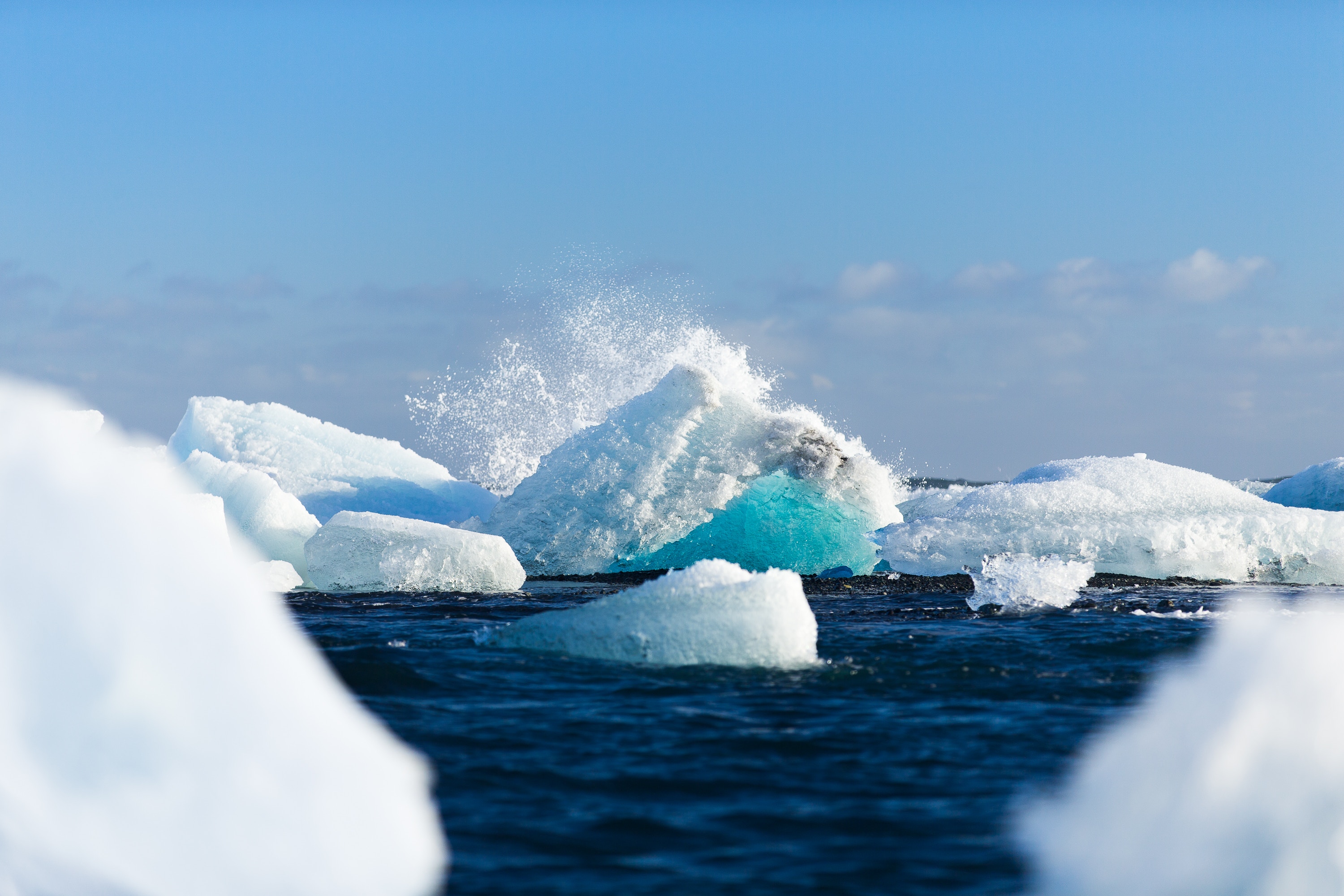
The result was that huge amounts of snow began to fall on the poles where for the first time extremely cold temperatures now occurred. The snow and ice accumulated and pushed far down and up from the two poles—a great ice age. The explanation that there were many ice ages covering vast periods of time by evolutionists is simply a product of their bias towards reading extreme age into every geological formation they observe.
An alternate explanation is that with such catastrophic changes in atmospheric weather patterns, the formation of polar ice caps and extreme differences in temperatures in various parts of the earth, the weather patterns on earth were in great flux. A large amount of melting and refreezing would have been taking place—perhaps for 100s of years—causing rapid movement of the ice fronts towards and away from the warmer regions extending away from the equator. Finally, the overall weather patterns reached a fairly stable equilibrium—the result being the fairly stable polar ice caps we have today.